Note to reader: The below updates were originally posted to a group chat that I was using to keep my family and friends updated on the progress of my sea adventure.
Update 1-November
After following weather patterns the last few days, our weather window for starting the crossing from The Canary Islands to St. Thomas, US Virgin Islands starts today!
So the past two days we have been making preparations: food provisioning, refill of gas tank and cans, and various minor boat maintenance tasks.
The maintenance tasks:
- Fix the leak in the water heater (for those nice warm comfy showers)
- Remove all unnecessary equipment from the decks (nobody planning on doing any stand-up paddle boarding in the open seas)
- Lubricate the sliding car used to raise the mainsail
- Re-run the dinghy support line to prevent chafing
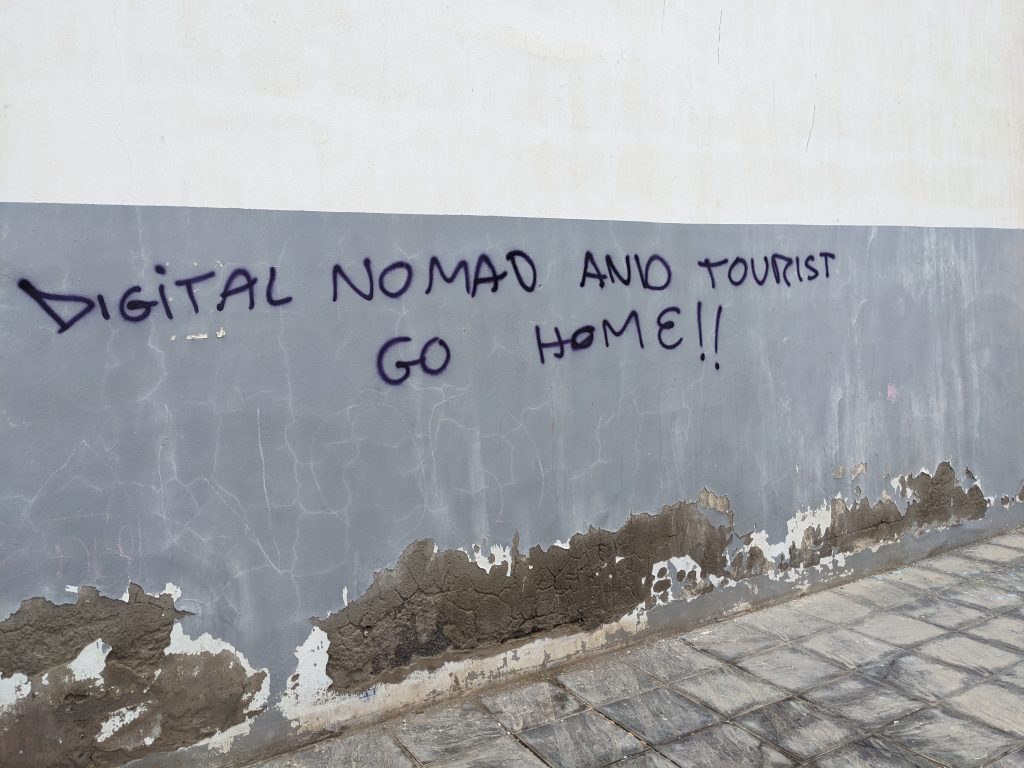
After all was prepped, we made one final shopping run before pulling up our anchor and starting our 3-week sea voyage to the Carribbean.
As of 11:35 AM on 1-November we have started our Atlantic crossing!
Here is our current location:
https://goo.gl/maps/pZMBj1KBAXZDeV3U8
Update 2-November
This is day 2 of my planned 3-week Atlantic crossing. We are currently sailing on wind power, heading west to southwest, targeting the final destination of St. Thomas, USVI.
Yesterday we left our anchorage in Las Palmas, Gran Canaria in the Canary Islands at about midday.
After we were clear of the harbor, winds were blowing pretty good! So we quickly put the sails up, shut down the engines, and started sailing.
Because the wind was pushing us from behind, we were able to put the sails out in a configuration called “wing-on-wing”. This is where the sail in front is on one side, and the mainsail is on the other side. In this way, the wind coming from behind literally pushes you forwards.
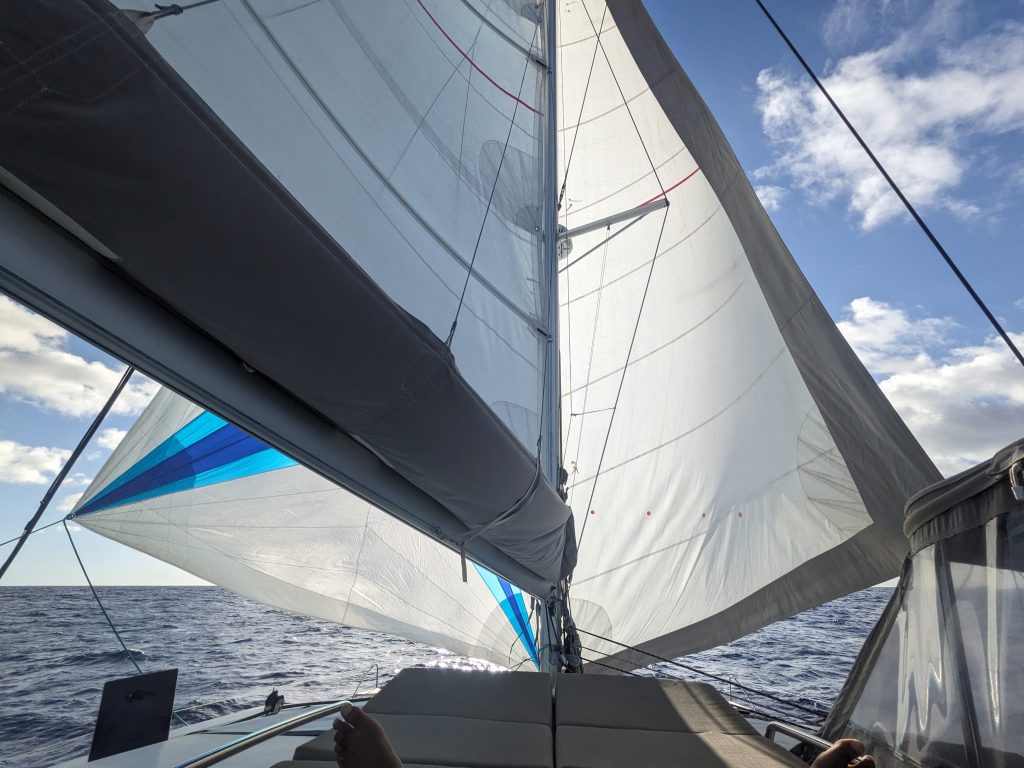
The seas were very active, with medium sized waves moving us along from behind. If you’re not used to that amount of rocking, it can be a bit scary…but not to a salty sailor like your boy here 😎
When the waves come from behind like that, you get to “surf” the waves, where the wave lifts you up as it passes under, then the boat coasts down the wave as it continues on. We managed to get up to 11 knots when surfing down some of those waves! 🏄🏽🤙🏽That is almost as fast as we can expect to go in a boat of this size, in most cases.
After a dinner of beef tacos, we set about for our night watches. My shift is now from 1am-4am, so I was in bed by 8pm to try to get a few hours rest before my shift.
Night watch when you are sailing on wind power is a bit more active. This is because if you need to alter your course you can’t just turn the steering wheel — there are sails out that will not work if you turn too much in any direction. So you need to be vigilant to make sure the wind does not switch up on you, because if it does you need to react quickly or else you will slow the boat down to a crawl.
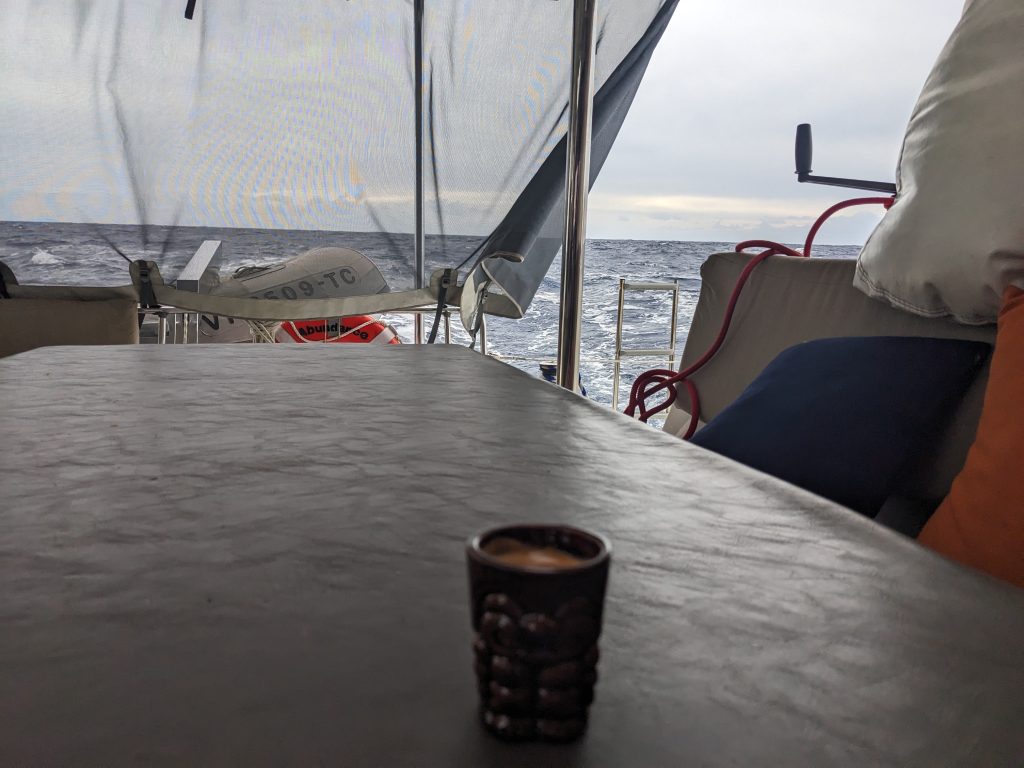
At the start of my night watch there was a mystery boat which did not appear in radar nor the AIS reporting system, which we had to figure out how to avoid a collision with. We managed it, but it involved untying and re-tying sails in the dark and a lot of maneuvering. A first for me, but I was able to represent and pull it off like I’m not new to this.💪🏽
It still is a mystery who that boat was, but our bets are on some sort of shady enterprise…why else would you be sailing the open seas at night with nobody able to see you on their navigation equipment?? 🤔
That’s Day 1 in the bag. Plenty more sailing to go, so I’ll be taking it one day at a time.
Here is our current position:
https://goo.gl/maps/hyAnA1i3mkce1AHC8
Update 3-November
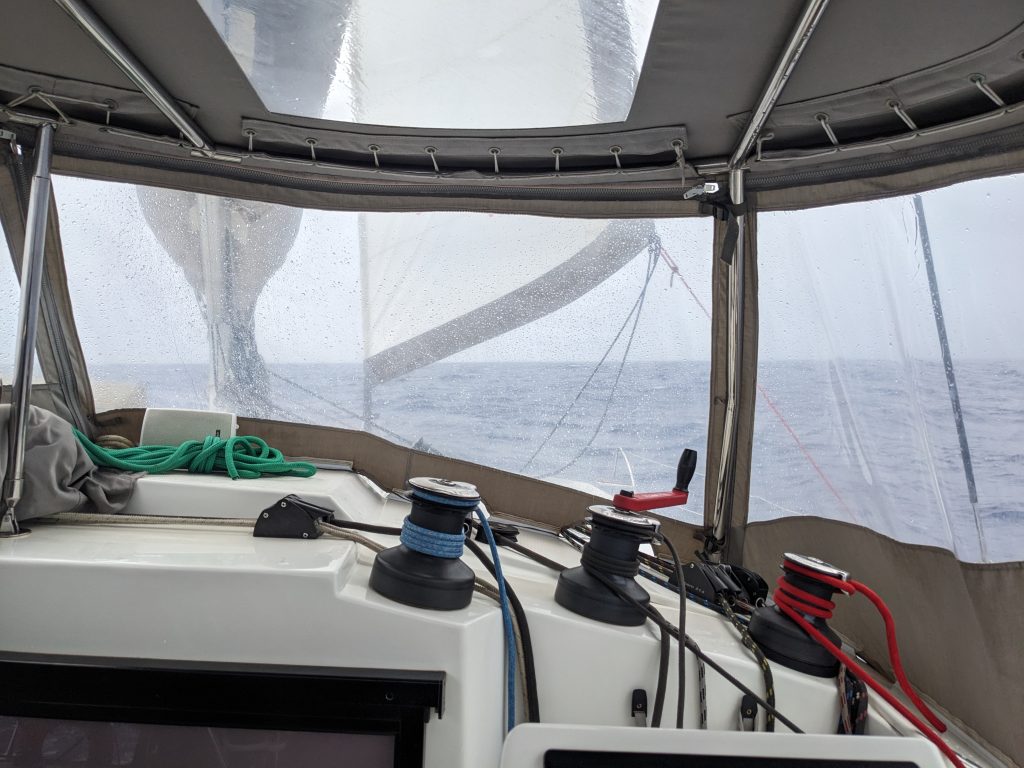
It is now the start of day 3 of my 3-week planned ocean passage from the Canary Islands to St. Thomas, USVI. We are currently sailing on wind power, in a mostly westerly path in a direct course to our destination.
Yesterday was a good day for sailing. Skies were partly cloudy early on and it got clearer in the afternoon. We had a hot breakfast, since in a few days the seas may make it trickier to do serious cooking.
We were able to sail donkey’s ears (a.k.a. wing-on-wing) all day, with the winds fairly constant. No high speeds, just a consistent steady course.
I volunteered for dinner duty, so I made some curried red lentils with rice and carrots. But that was a delicate process — with the boat rocking around, a simple task like boiling a pot of water can be dangerous! So how do you cook safely with the boat making huge sways back and forth and side to side? Very carefully …
Well to cook with one pot at a time, there are screw-in supports that can keep the pot securely in place above a burner. So that simmering pot of lentils is safe. But for that second pot? There is no magic there, the only strategy I came up with is the “stay close and don’t take your eyes off that skillet” method 🤣 I also paired that up with the “Gumby stretch and reach” method to grab a missing utensil while keeping one hand on that pan 🥴
But I got through the dinner cooking without spills or burns, so I call that a win 👍🏾
The night shift was calm and uneventful, no boats anywhere near us and consistent wind so no need to tinker around with the sails either.
As we get further west and further away from the Canary Islands and the west coast of Africa, I suspect the wind and wave patterns will start to stabilize, so that each day of sailing should become more and more similar to the previous day. Or at least that would be the desired conditions. But I’ll keep giving daily updates anyhow, to let y’all know we’re still doing well and moving forward.
Here is our current location:
https://goo.gl/maps/SZwrYc6L1RqbVEaK9
Update 4-November
It’s now day 4 of our 3-week planned sea passage from the Canary Islands to St. Thomas, US Virgin Islands. According to the GPS projection, we still have 2,450 nautical miles to go…so it’s still early days, but we are well on our way.
We are now travelling on an almost direct west trajectory. We have gone a few days now with the engines turned off, so that is great for fuel conservation. Ideally we would go the vast majority of the trip without firing up the engines at all, but that would also mean that if the wind dies for awhile, that we are okay to extend the trip’s duration by at least another full week. So it’s a balancing act we are playing to sail on wind power alone for as long as we can, without delaying us too much when the wind dies down.
Yesterday was a cool learning experience because in the early afternoon the captain decided that we would raise our “Code Zero” gennaker sail. The winds had slowed a bit, and the extra large sail out in front could help coax a bit more speed in those conditions.
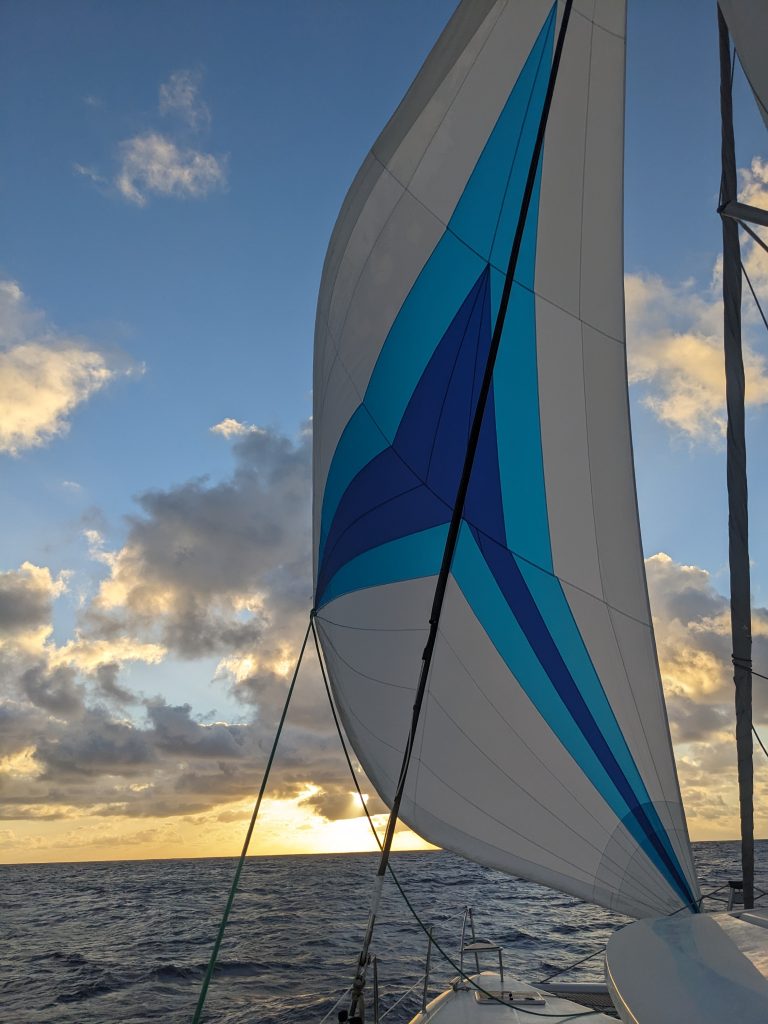
If you look at the common 2-sail “sloop” rig setup, you see one foresail (jib/Genoa) in the front, and one larger mainsail behind. This third sail, our “Code Zero”, is mounted on the opposite side of the Genoa. It takes a bit of work to install the roller furler support, hoist the sail to the top of the mast, and run the control lines to the back of the boat. But once we got everything rigged up, man did that new sail look pretty 😍
In the end we did not get as much wind as we were hoping with that third sail deployed 🤷🏽♂️. So after a photoshoot session involving everybody’s camera plus one drone, we dropped the Code Zero around sunset and moved back to our original sloop rig.
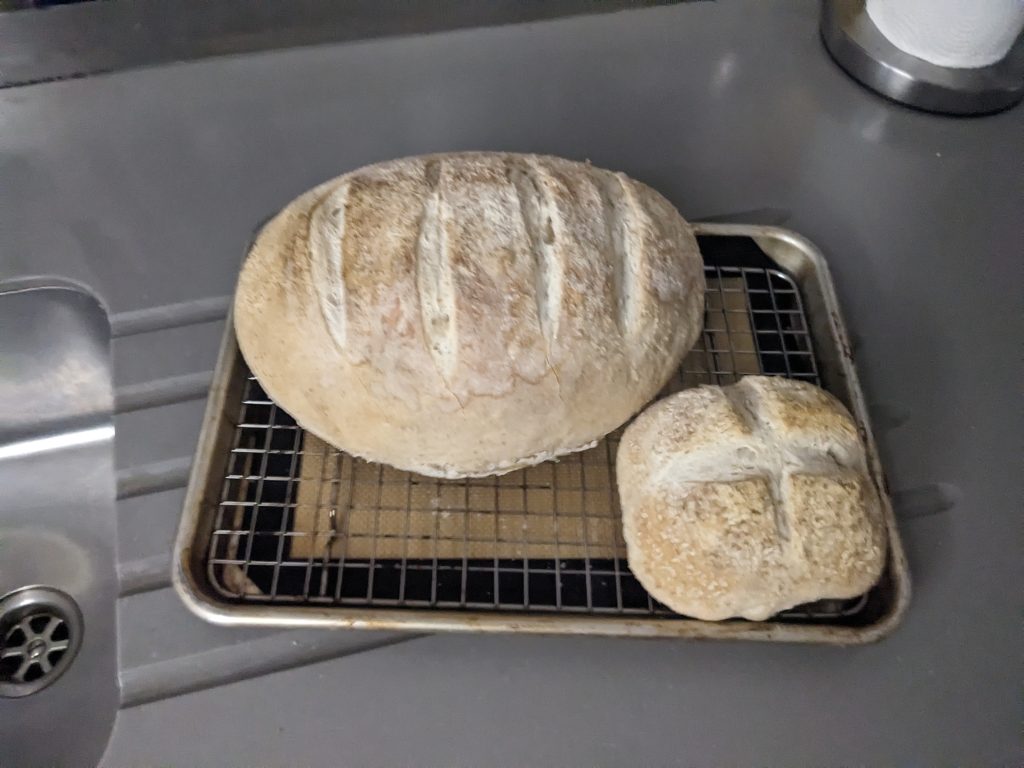
Between sail changes, I had been preparing a couple of sourdough bread loaves in the galley. If you saw me from 2013-2017, you will have seen that I was pretty obsessed with bread making back in those days. My first onboard attempt at bread a week ago was a bit lackluster, but this go ’round I managed to pull off an impressive pair of loaves! And this morning that bread toasted next to some eggs was pretty dang delicious 😋
Night shift was calm, with pretty steady winds to keep us going at a good clip of around 6 knots on wind power. Hopefully this keeps up for days to come!
Here is our current location:
https://goo.gl/maps/BGLpNjWS2YmSH4mU9
Update 5-November
It is day 5 of our planned 3-week sea passage from the Canary Islands to St. Thomas, US Virgin Islands. We are currently sailing on wind power alone in a mostly westward course towards our destination. We are also about 420 nautical miles west of the nearest African shore.
Yesterday was a nice sunny day for sailing, with the tradewinds keeping us at a 6-7 knot boat speed — which is our ideal cruising speed to get us to St. Thomas as planned.
With our engines off, that cruising speed made it ideal for trolling, in other words, for putting fishing lines out. As long as the engines are off, the risk of getting line caught in the propeller goes away, so the captain decided to out our fishing lines out again.
And after a few hours, we got a Mahi Mahi on the hook! First mate Vanessa reeled her in, and once inside the boat we were able to see what a beauty the catch was.
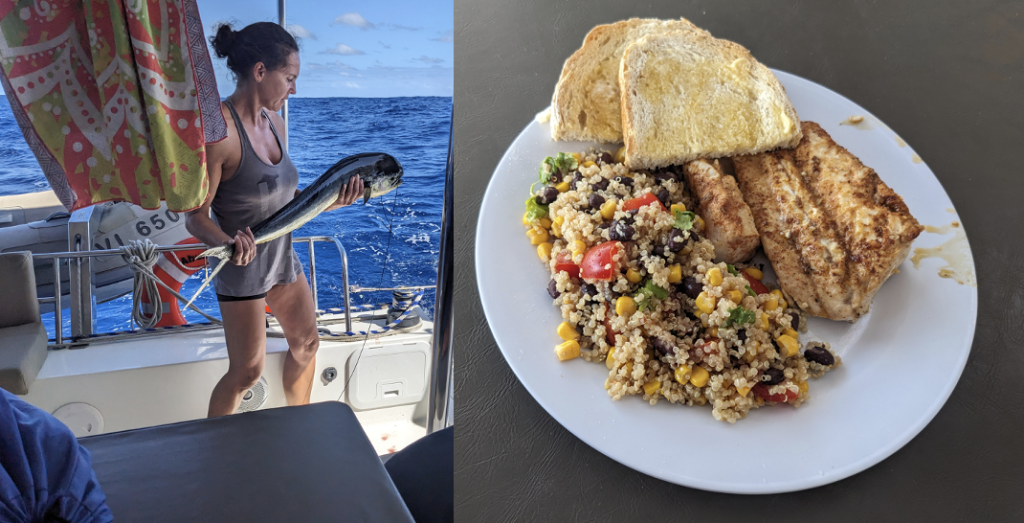
That changed our meal plan for the day, of course, so we had an early dinner of blackened Mahi Mahi and quinoa salad — the other half of the fish fillets we put in the freezer for another day.
The fish was about as long as my arm! It was a big ordeal to get the fish cleaned, prepped and filleted, not to mention the work of cleaning up the deck afterwards … I’m pretty sure that if another fish caught the lines that day, we probably would have let her go to avoid all that work a second time that day 🤣
Night watch started off slow, with winds slowing us down to a crawl, but we sped up eventually and kept that up through the rest of the night. So we are going on 3-4 days now under way with our engines off — here’s to hoping that keeps up!
Here is our current location:
https://goo.gl/maps/s111NE5LfrRV9baQA
Update 6-November
It is now day 6 of our planned 3-week sea passage from the Canary Islands to St. Thomas, USVI. We are travelling in an almost directly west course towards our destination at this point.
We have been able to harness the tradewinds for the past 3-4 days now, sailing on wind power alone with boat speeds averaging from 5 to 6 knots (5-6 nautical miles per hour). We still have just under 2200 nautical miles to go, so an optimistic 15-18 days remaining if the weather conditions allow us to sustain this pace.
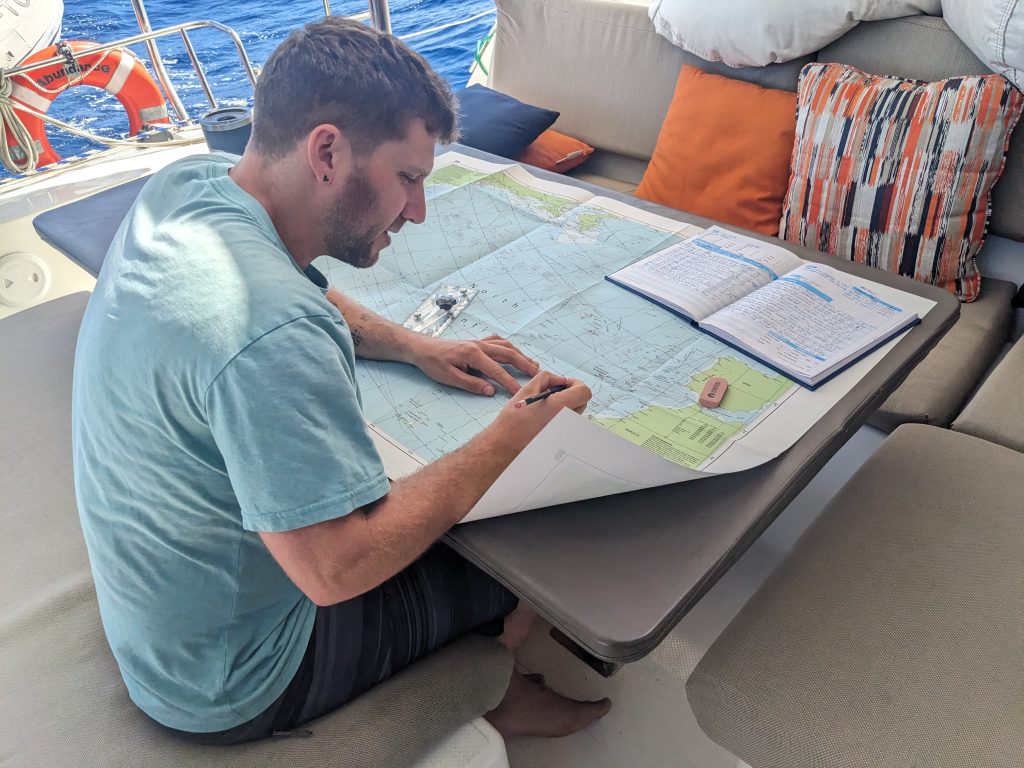
With the winds so steady, the weather relatively warm and the seas (waves) moderately active, the day passes in a very relaxed atmosphere. This is of course thanks to the autopilot! 😃 Currently the waves are 5-6 feet high. But they are not waves craahing over the deck, they are more like large swells tha the boat rides as they roll through.
If you are steering by hand, keeping a steady course while riding waves that come at you from the back, sides, or at odd angles, is a lot of work! I know this because we were hand-steering for the first week of this sailing excursion, before Captain Blaine managed to install a new autopilot module back in Gibraltar. But the autopilot can handle all of this steering with ease, and does not get tired or complain about how long his shift is 🤖
That makes your day shift a lot more hands-off, freeing up the crew for other important activities such as fishing, playing chess, reading, learning new languages à la Duolingo, studying for a celestial navigation exam, and working on your poker-face during the Texas Hold-em tournament 🤣
This night shift was the first one where the winds kept us going at 6-7 knots throughout the night — with these speeds in that wind it feels like you are zipping along very fast.
It is a sunny day today, I’ve had my morning espresso dosage, and the winds have not let up on us yet. Onwards!
Here is our current location:
https://goo.gl/maps/9AyJAvtmvkBLbk9m7
Next Post in series: 2023 Atlantic Crossing Week 2 >>
Previous Post in series: << My First Atlantic Crossing
( Part of series: Europe to the Caribbean with Abundance, My First Atlantic Crossing )