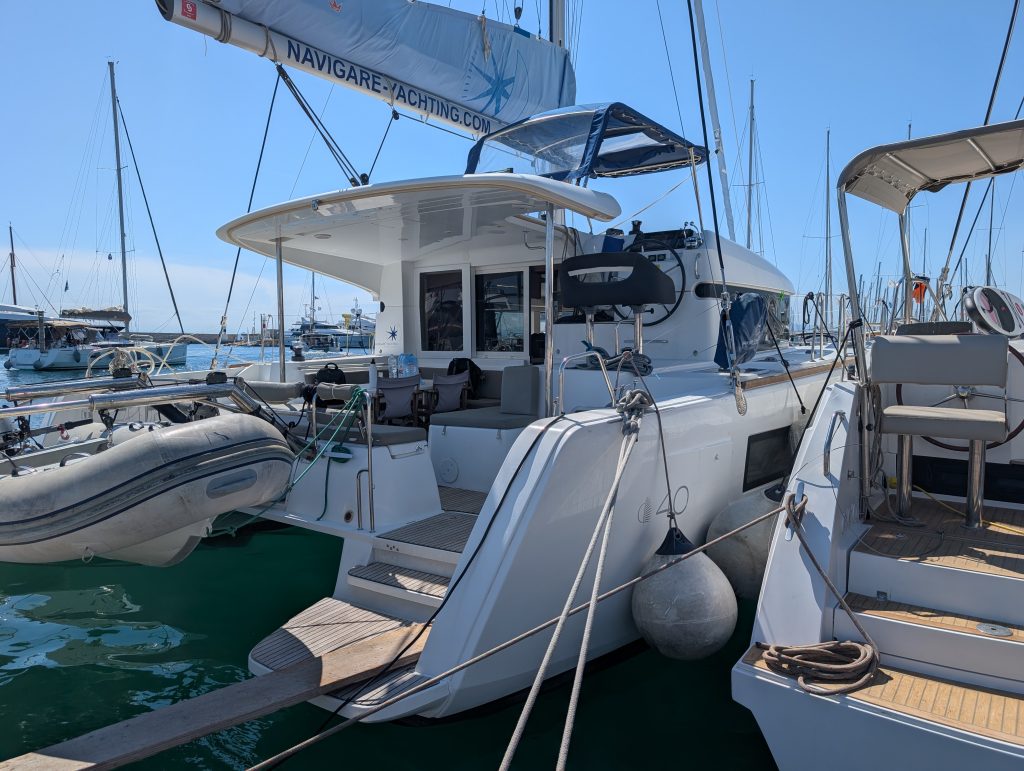
On the first day of charter, our chartering company advised that check-in time is 4:30 PM. But our skipper Jason advised us to come earlier, as he was able to get the cleaning crew to clean up the boat earlier, and so if we could submit paperwork early we could eventually also leave earlier.
So we arrived around 3:00 PM, and I went to the office to sign the paperwork. It was fairly painless, I just validated the crew list, provided her with my new international proficiency certificate (I ordered a new one and it ended up arriving on time), signed the contract in triplicate, and paid the security deposit via credit card. With that done, the chartering office then dispatched s representative to get the papers signed by the port authority. Once the papers came back, we would be cleared to set sail.
Boat Check-in
While we waited for the paperwork, some of our crew left to handle the bulk of the provisioning while I stayed onboard the boat to start going over the boat with our skipper. The chartering company representative arrived to perform the formal check-in of the boat at 4:30 PM. The check-in was a review of the following:
- Test of anchor and anchor windlass, as well as bridle.
- Explanation that anchor windlass should not be engaged without the engines being on
- Highlighting location of fuses for anchor windlass, electric winches, and all other key electronics
- Review of location of floating docking lines, spare lines, propane tanks, emergency reserves of diesel fuel and outboard motor fuel, and fill-up spot for fresh water tanks
- I also asked recommended max RPMS for the engines.
- I also noted that our 3 SUP’s had not yet been delivered, so he noted that.
After that check-in review, I signed the check-in confirmation using my finger on his phone, and the check-in process was completed with an email confirmation to me. Now all we needed was the paperwork and SUP’s and we would be good to leave!
Boat Issues
While we waited for the paperwork, the crew started settling in to the boat with provisions, which is when we identified the many issues with the boat:
- One of the windows in the man salon area had a broken hinge and so would not stay open
- Similar window issues in two other cabins
- Stained curtains in one cabin
- Sheets and towels still had not been delivered
- Two mattresses were wet – we put them on the netting at the bow to let them dry out
- The shorepower was not charging the batteries even though it was plugged in.
- The wall-mounted fan in one of the cabins was hanging by its wire
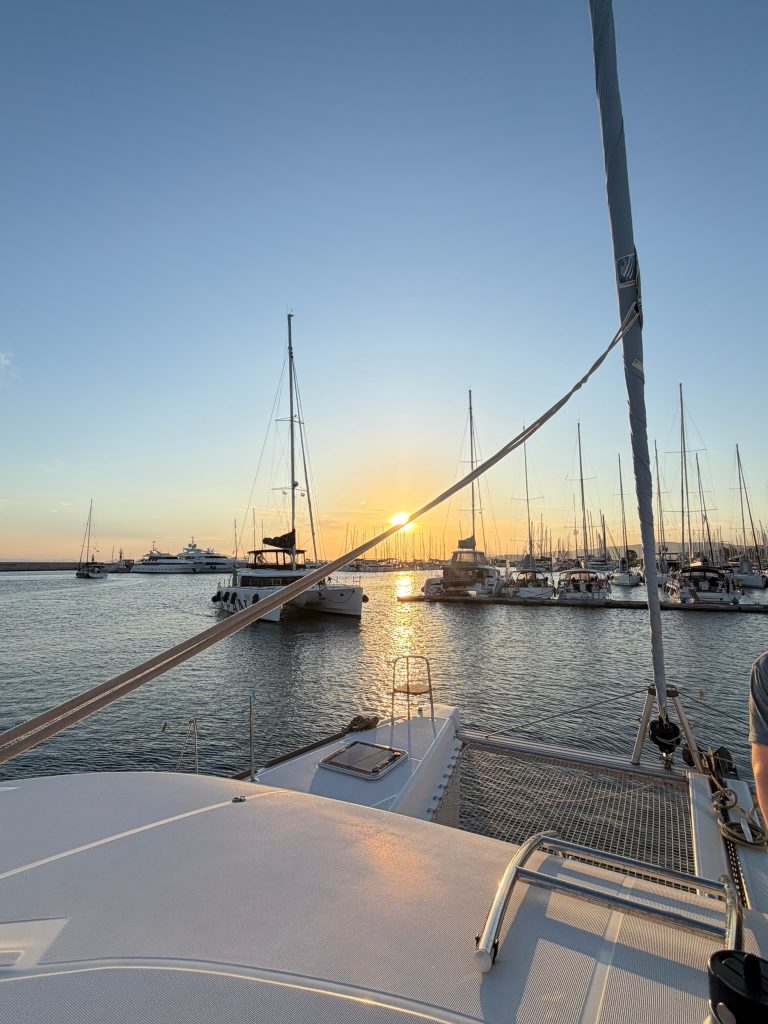
As we waited for the paperwork to arrive, the linens were finally delivered. By 7:00 PM the papwerwork was still not available, and now we started to complain strongly to the office – any much further delay and we could not leave today as planned! The SUP boards finally arrived by 7:00 PM, but one was in decent condition, with the other two damaged, one even missing its fins. We had to inflate two of the SUP’s with a manual air pump which did not work properly. In the end, we did not get the paperwork until 8:40 PM, when the Sun was starting to set. At this time the skipper could have taken us out at night, but a night sail is not something that you would plan to do if you can avoid it, especially since we’d also have to anchor at night. So we decided to sleep in the nmarina that first night and leave at dawn the following day. In any case, the power issue was still not resolved, we did not have any confidence that boat’s batteries could be charged from shorepower. So we left for dinner as the skipper worked with the techs to run a full diagnostic of electronics on th9e boat.
By 11:00 PM the techs had cleared the boat as passed inspection, and we were free to leave whenever we desired.
So that was one evening lost, which we knew we would have to complain to the chartering company to be compensated for. Not a great start to the charter, but at least we could go to sleep with comfort that we would indeed start off at daybreak the following morning.
Lessons Learned
If there is any lesson learned from the fiasco of this first day of charter, it would be the following:
- Make a checklist of things to inspect / validate as part of the check-in process. Things like malfunctioning hatches and windows were easy catches.
- Spend the first few hours familiarizing yourself with the navigation chart plotter, as the technology may be different that what you are familiar with. (I didn’t do this and so missed out on some good route tracking for the first 3 days.
- You may even start plugging in the waypoints for the itinerary, as well as experimenting to see if you have extra features such as connecting your phone to the plotter for remote access to the chart plotter details.
- In fact I would have planned to leave the morning after the check-in date—this would not only give a good buffer in case issues like this arise, but also allows the skipper to get some key planning steps also locked in.
Next Post in series: 2026 Greece: Athens to Aegina (Day 2) >>
Previous Post in series: << 2026 Greece: Planning
( Part of series: Bareboat Charter in Greece 2026 )